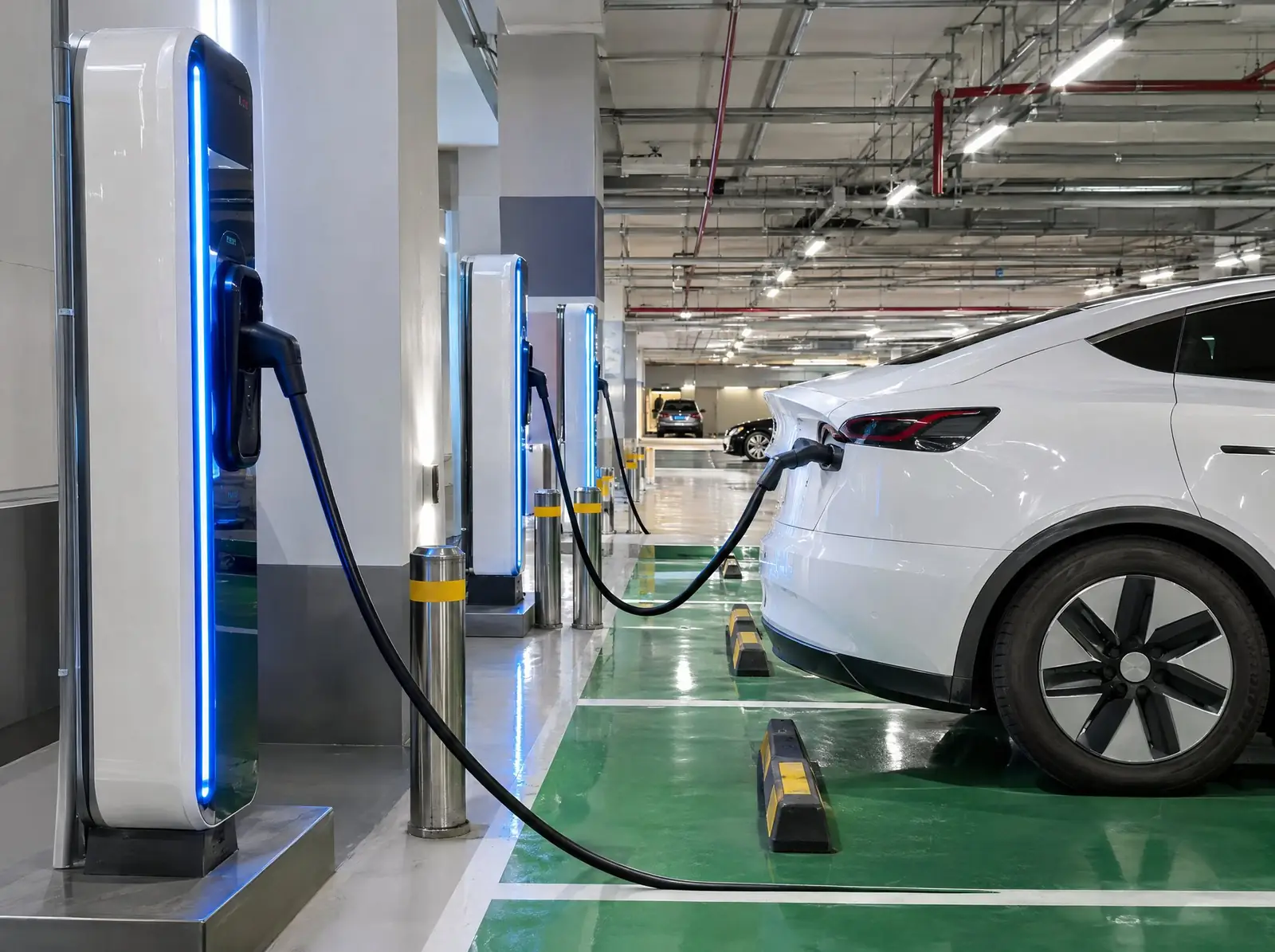
An EV charger is only as good as the electrical work behind it. A charger on an overloaded supply trips breakers, charges slowly or becomes a safety risk. We start by checking your existing supply and distribution board, how many cars need to charge and how quickly, then recommend the right chargers, cable routes and protection for your property.
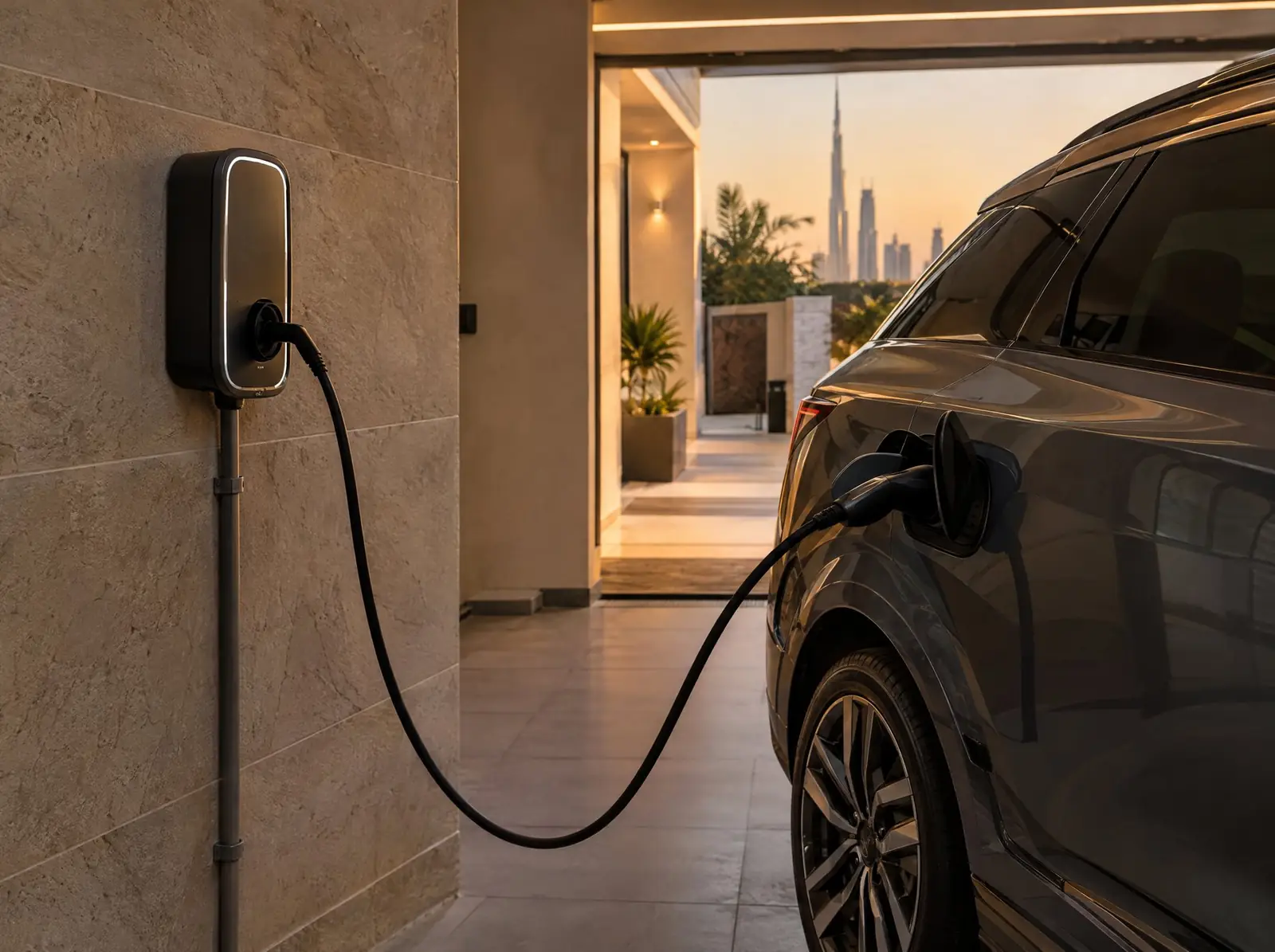
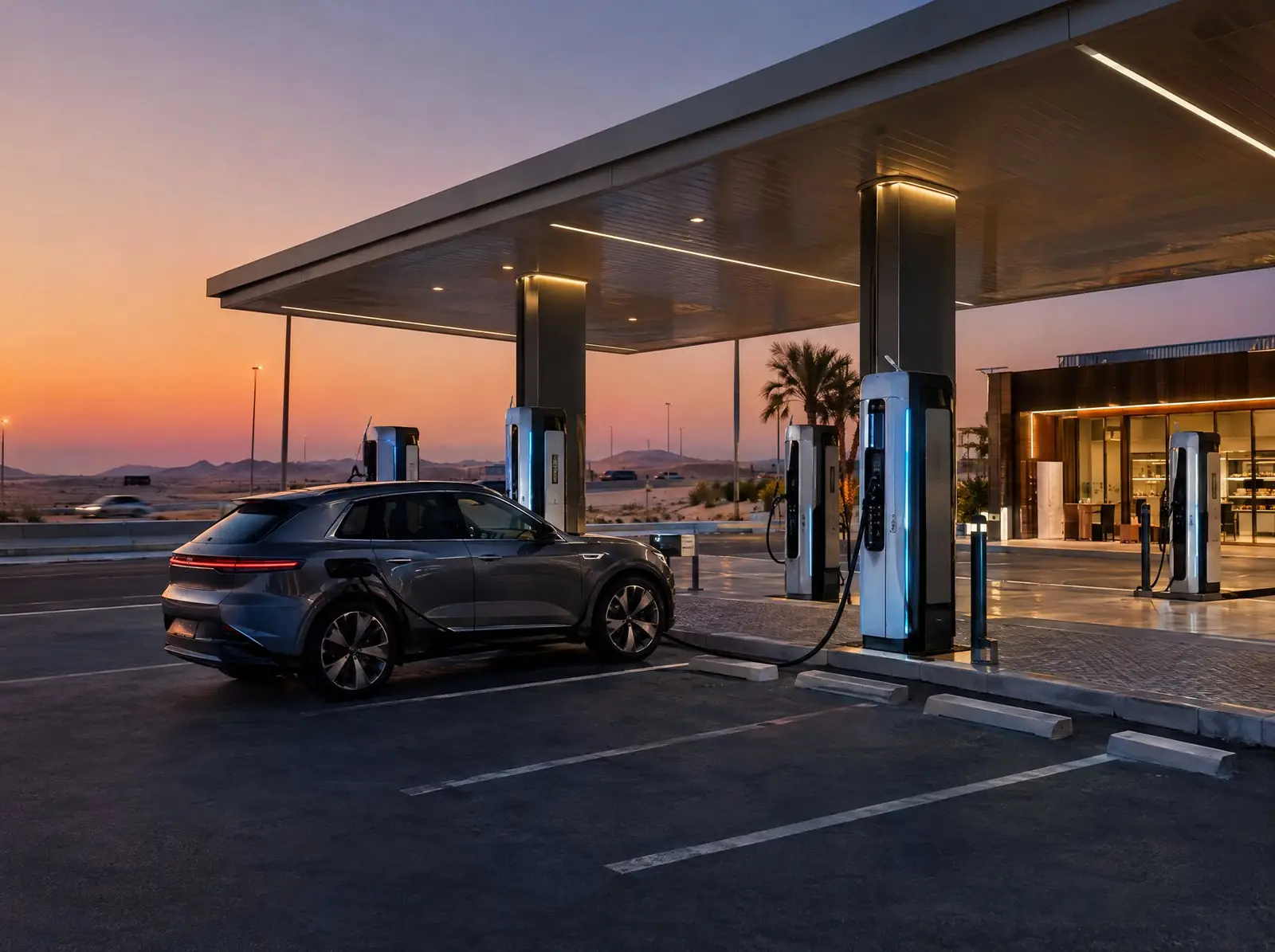
For villas we install wall-mounted AC chargers that fill a car overnight. For malls, offices, residential buildings and hotels we design multi-charger systems with load management, user access and billing. For charging stations and fleets we plan DC fast chargers, the supply they need and the software to run them. Every installation is tested, documented and handed over with training.
What is included
- 01Site survey and electrical load assessment
- 02Wall-mounted AC chargers for villas and homes
- 03Multi-charger systems for malls, offices and buildings
- 04DC fast chargers for stations and fleets
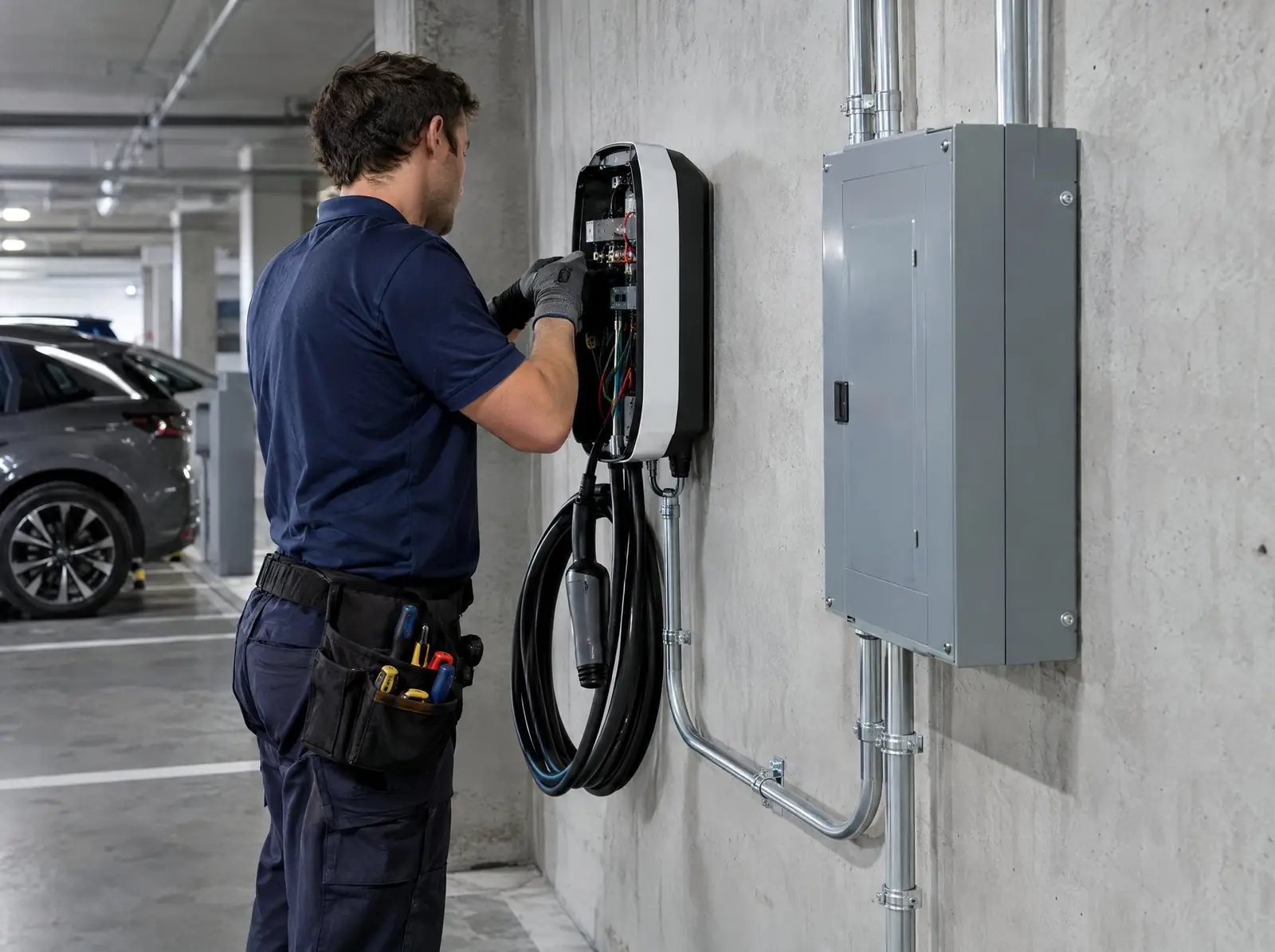
- 05Dedicated circuits, protection, earthing and cabling
- 06Load management, access cards, apps and billing
How we plan an EV charging installation
We begin with a visit to see the parking area, the distribution board and the route from the supply to each charger. We note the available capacity, the cable distances and whether the chargers will be wall-mounted or on pedestals. For buildings with many bays we look at how many cars will charge at the same time, so the system shares power smartly instead of needing an oversized supply.
- We check that the existing supply can carry the new load, or advise on an upgrade.
- We plan dedicated circuits with the correct protection for each charger.
- We choose chargers and connectors that suit the cars you and your visitors drive.
You then receive a written proposal with the chargers, electrical works and a fixed price before anything is installed.
EV charger types, explained simply
- AC home chargers (7 to 22 kW): wall boxes for villas and private parking. A typical car charges fully overnight.
- AC destination chargers: for malls, hotels, offices and residential buildings, where cars stay parked for a few hours.
- DC fast chargers: high-power units for charging stations, highways and fleets that add a large share of range in a short stop.
- Connectors: Type 2 is the common connector for AC charging in the UAE and CCS2 for DC fast charging. Some models use other standards, so we check the cars you expect before choosing.
Load management, access and billing
When several cars charge at once, load management shares the available power between them and protects the building's supply. Networked chargers can be controlled with RFID cards or a mobile app, limited to residents or staff, and connected to a billing platform so users pay for the energy they use. Chargers that support the open OCPP standard give you more choice of software now and later. We can also connect the parking area to your CCTV and access control systems.
Safety and approvals
EV charging draws high current for hours, so the protection, earthing and cable sizing must be right. Each charger gets its own circuit, suitable residual current protection and a tidy, labelled installation. In Dubai, EV charger installations must follow DEWA's requirements and be approved before they are connected, and other emirates have their own utility rules. Ask your installer to handle the application and inspection. We prepare the drawings and documents the process needs and test every charger before handover.
Planning chargers for a mall or building?
Share the number of parking bays, the type of users and your timeline, and we will propose a phased plan that starts with the bays you need now and leaves room to grow. Book a free site visit or read our frequently asked questions.
Ideal for
- Villas and townhouses
- Shopping malls and retail parking
- Residential and office buildings
- Hotels, hospitals and car dealerships
- Fuel stations, fleets and charging hubs
From our projects
Questions about this service
Can I install an EV charger at my villa in Dubai?
Yes. Most villas can take a wall-mounted AC charger, which fully charges a typical car overnight. The installer first checks that your supply and distribution board can carry the extra load, then runs a dedicated circuit with the right protection. In Dubai, home EV charger installations must follow DEWA's requirements and be approved before connection. maxclick surveys the villa, prepares the documents and installs and tests the charger.
What is the difference between AC and DC EV chargers?
AC chargers send alternating current to the car, which converts it on board. They typically range from 7 to 22 kW and suit homes, offices, hotels and malls where cars stay parked for hours. DC fast chargers convert the power inside the charger and deliver much higher power directly to the battery, so they suit charging stations, highways and fleets where drivers need a quick top-up. maxclick recommends the mix that fits how long cars stay at your site.
How many EV chargers can my building or mall support?
It depends on the spare electrical capacity and how many cars charge at the same time. With load management, several chargers share the available power intelligently, so you can install more bays without an oversized supply. A load assessment of your main board shows how many chargers you can add now and what an upgrade would allow later. maxclick carries out the assessment and proposes a phased plan.
Can residents or customers pay for charging at our chargers?
Yes. Networked chargers can be limited to authorised users with RFID cards or a mobile app and connected to a billing platform, so each user pays for the energy they use. Chargers that support the open OCPP standard work with many management and billing platforms. maxclick sets up user access, pricing and reports to match how your building or business operates.